
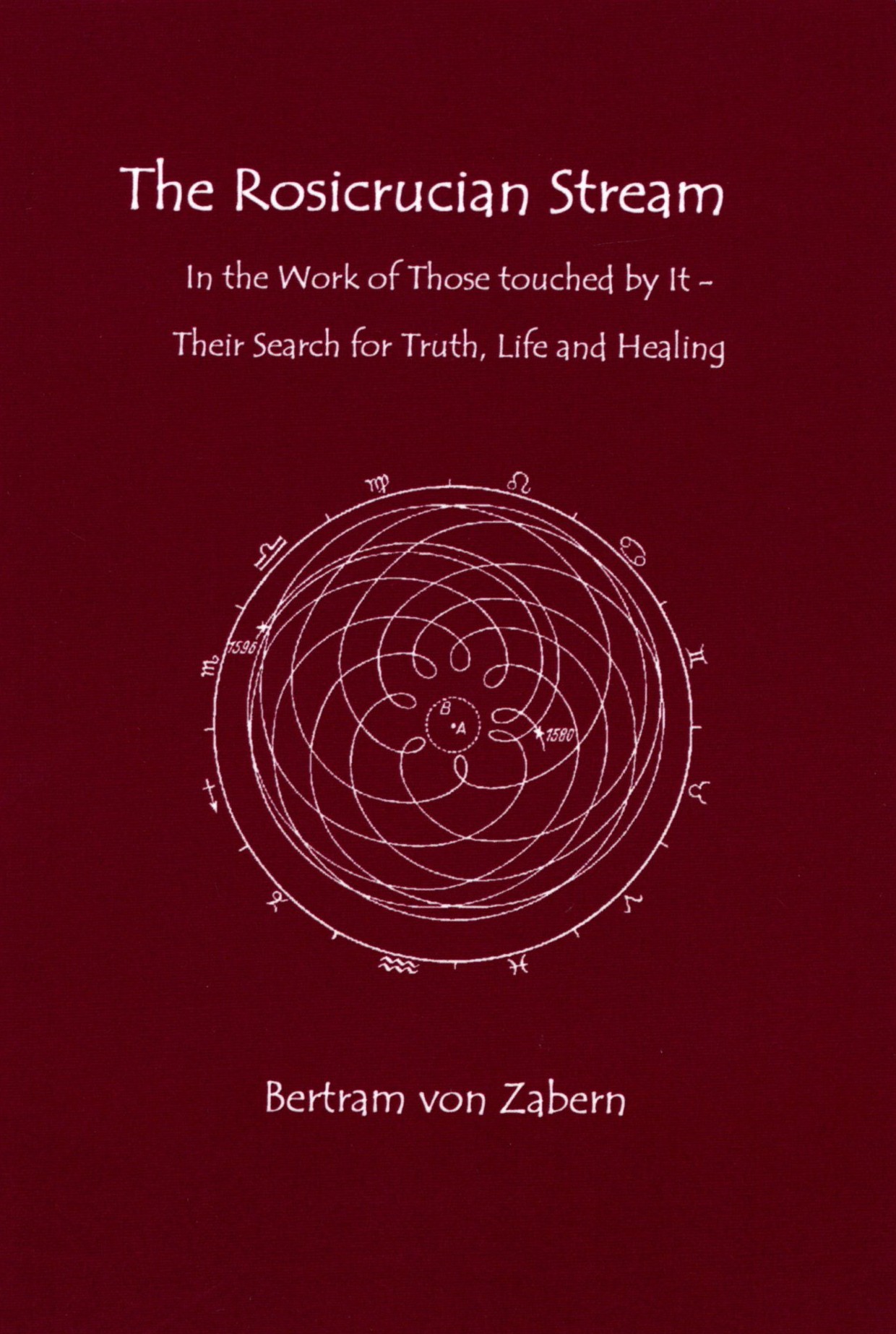


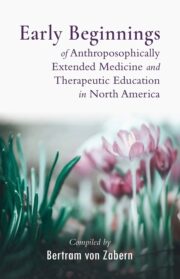
This book explores the enduring aims and impulses of the Rosicrucian stream through the lives and work of individuals shaped by its worldview, asking how their quest for truth speaks to the present age. While the fundamental human questions remain much the same, they now arise within a world profoundly transformed by modern natural science and technology. From its beginnings, Rosicrucianism stood as a quiet counterforce to a purely mechanistic understanding of nature, placing the human being—rather than abstract mathematics—at the center of inquiry. Its guiding ideals of discovering the wisdom inherent in creation and transforming natural substances into healing remedies continue to live on in contemporary culture. These impulses find a modern expression in the Anthroposophy of Rudolf Steiner, who emphasized that a deeper knowledge of nature and the human being emerges through sustained meditative practice carried out within the responsibilities of everyday life.
CONTENT
Forward
Origins of the Rosicrucian Stream
Christian Rosenkreuz, Paracelsus, Teachings of Antiquity, Thoth-Hermes, Pythagoras, Plotinus
Early Rosicrucianism in the Kingdom of Bohemia
Alchemists and Scientists at the Imperial Court, Jakob Bohme, Jan Amos Comenius, Angelus Silesius
Oneness and Particles in Science
Leibniz, Newton, Lavoisier
Rosicrucian Life in the Arts of the Eighteenth Century
Saint Germain, Lessing, Mozart, Goethe, Blake, Runge
A Spiritual Approach to Science
Goethe, Novalis, Hahnemann
Barriers between Outer and Inner Reality
Helmholtz and the Mechanistic School
About the Rosicrucian Path in Anthroposophy
The Rosicrucian Mission
Rudolf Steiner’s Theory of Knowledge, Pillar of Rosicrucian Science of Life
References
About the Author
Bertram von Zabern, M.D., and his wife Barbara live in Temple, New Hampshire, where their anthroposophically oriented family practice was for many years. They and their three sons have resided in the United States since 1969
The authors life-long research for the basics of knowledge was kindled in a student group in Freiburg, Germany, led by Alfred Ganter and Benedictus Hardorp, with free discussions about Rudolf Steiner’s Philosophy of Freedom. It resulted in the books Organic Physics, Warmth and in the present study.



Reviews
There are no reviews yet