




Reorganizing the Civilized World – Part 1
Navigate Complex Social Ideologies with Rudolf Steiner’s Insightful Lectures.
These two lectures were given in the latter days of April, 1919 at Stuttgart, Germany, and are the first two lectures of 14 total lectures that comprise Bn/GA/CW 330. They have never before been translated into English. This is a first edition printing. The “Appeal” is a part of Bn/GA/CW 23, and has been included in this volume for ease of reference. This is Part One of a two-part set.
Discover the depth of social and economic relationships through Rudolf Steiner’s compelling lectures delivered in Stuttgart in 1919. This collection, superbly translated and edited by Frank Thomas Smith, addresses critical viewpoints on socialism, the role of the state, and the interplay between economic and intellectual life. Steiner challenges prevailing notions and invites a reevaluation of societal structures, making this work essential for anyone interested in the dynamics of social change. Ideal for scholars, students, and thinkers, these lectures offer profound reflections that encourage a more thoughtful approach to modern challenges. Join the discourse on redefining societal progress with clarity and insight.
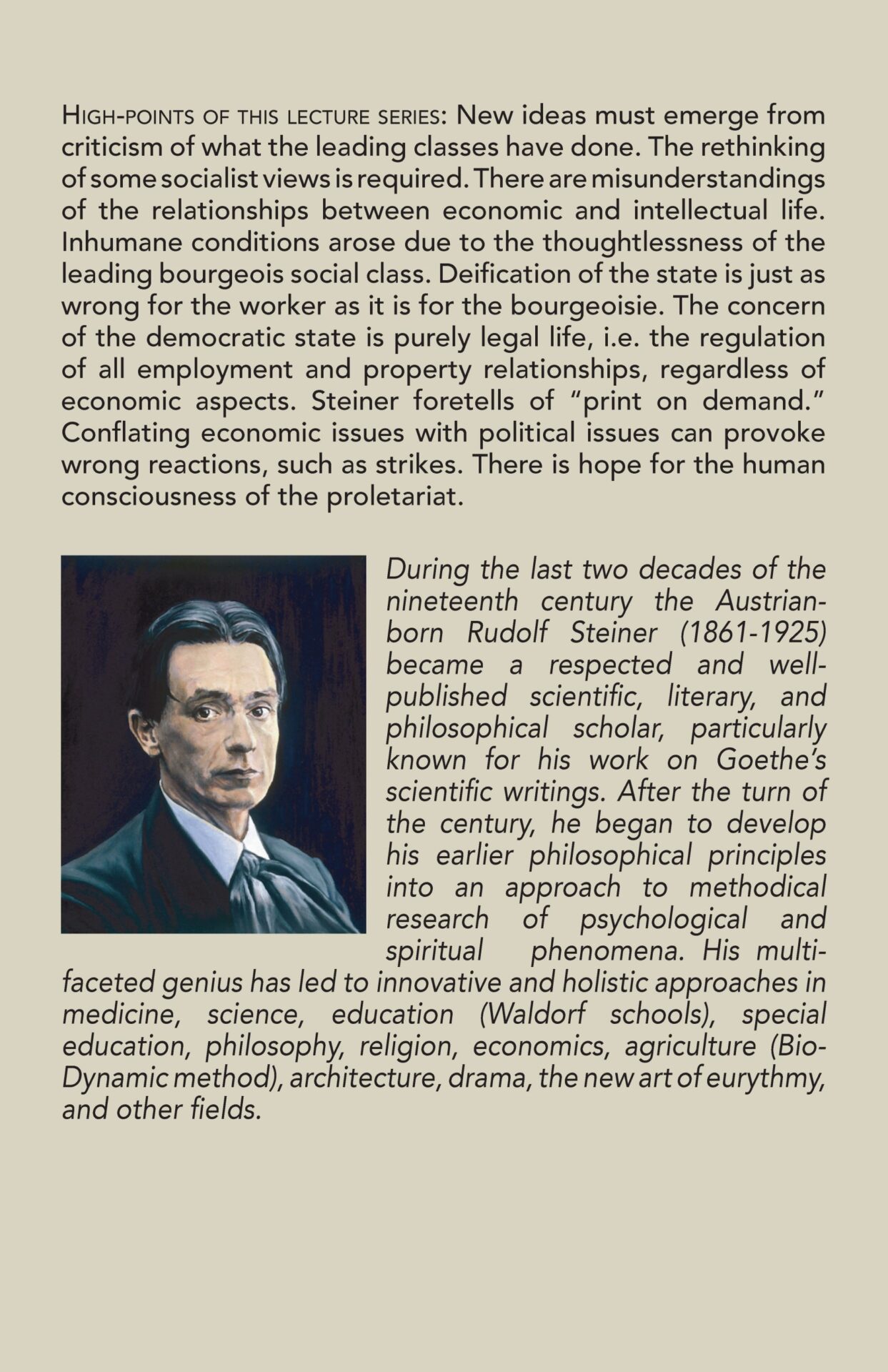
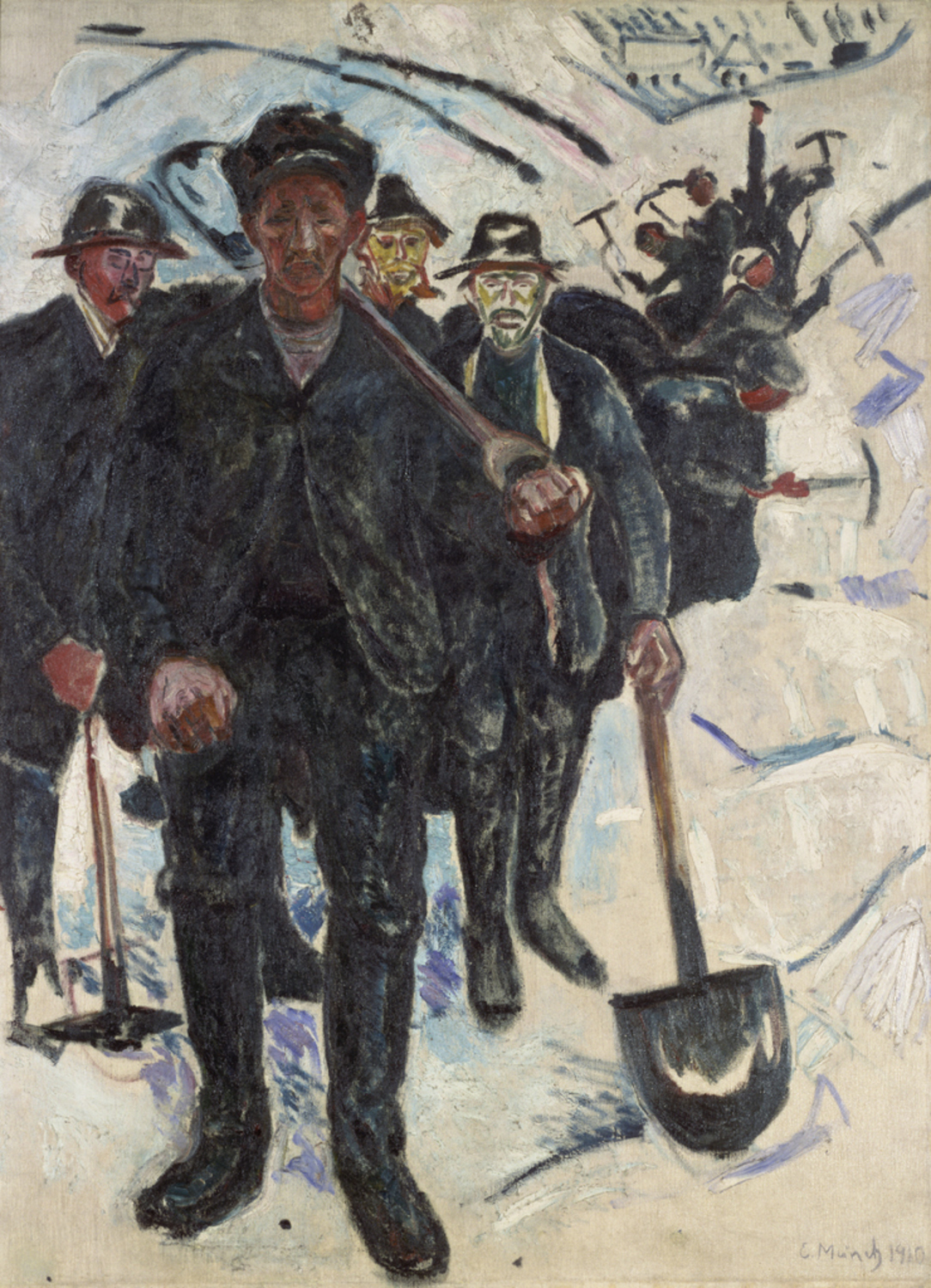
The cover image is the painting entitled, “Workmen in the Snow” by Edvard Munch. Painting of Rudolf Steiner on the back cover is by Peter Gospodinov.
About the Author
Rudolf Steiner (b. Rudolf Joseph Lorenz Steiner, 1861–1925) was born in the small village of Kraljevec, Austro-Hungarian Empire (now in Croatia), where he grew up. As a young man, he lived in Weimar and Berlin, where he became a well-published scientific, literary, and philosophical scholar, known especially for his work with Goethe’s scientific writings. At the beginning of the twentieth century, he began to develop his early philosophical principles into an approach to systematic research into psychological and spiritual phenomena. Formally beginning his spiritual teaching career under the auspices of the Theosophical Society, Steiner came to use the term Anthroposophy (and spiritual science) for his philosophy, spiritual research, and findings. The influence of Steiner’s multifaceted genius has led to innovative and holistic approaches in medicine, various therapies, philosophy, religious renewal, Waldorf education, education for special needs, threefold economics, biodynamic agriculture, Goethean science, architecture, and the arts of drama, speech, and eurythmy. In 1924, Rudolf Steiner founded the General Anthroposophical Society, which today has branches throughout the world. He died in Dornach, Switzerland.




Reviews
There are no reviews yet