
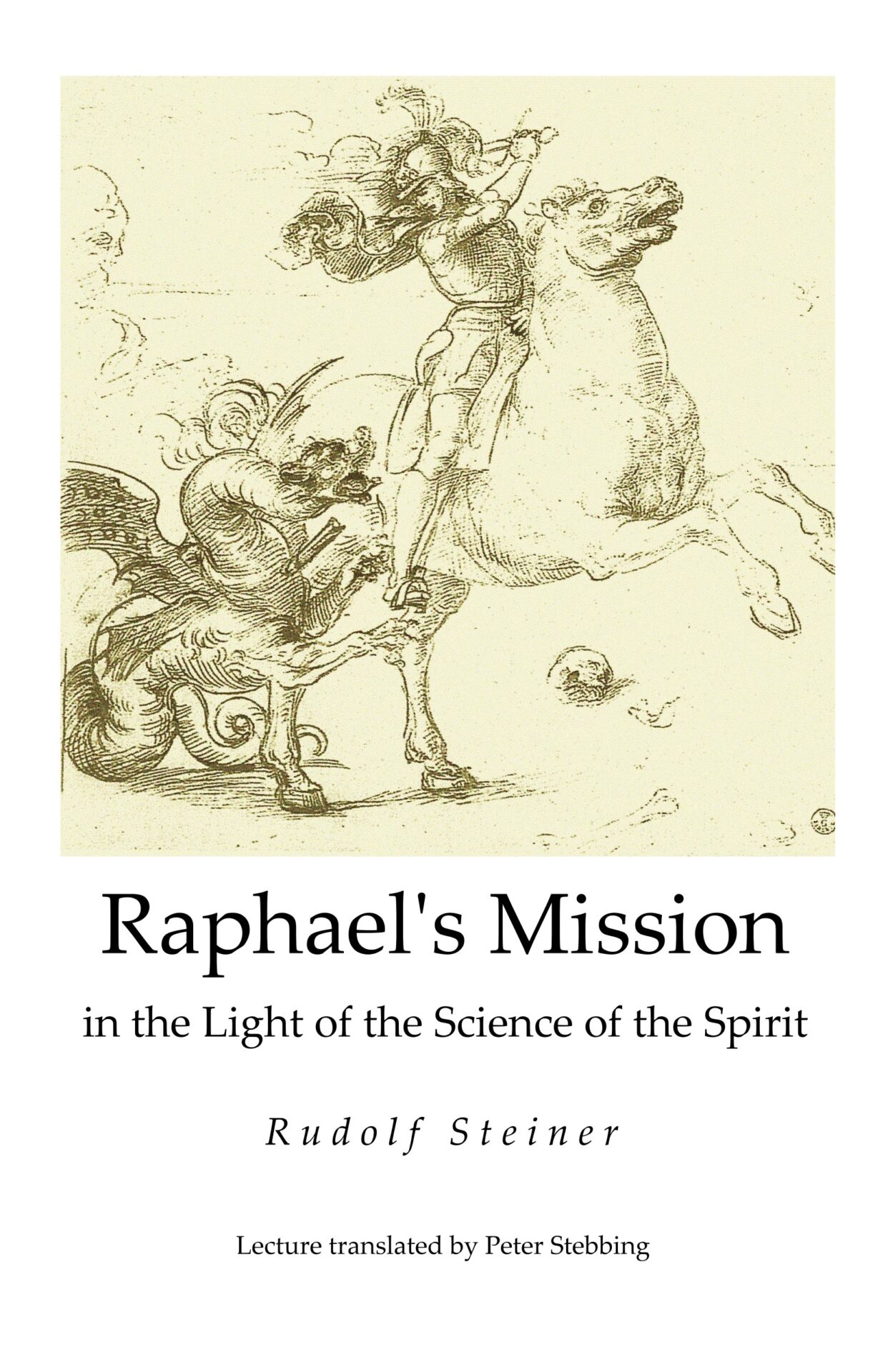


Raphael’s Mission in the Light of the Science of the Spirit
A lecture given by Rudolf Steiner: from Ergebnisse der Geistesforschung (Some Results of Spiritual Research). Bn/GA/CW 62. Lecture IX, 30th January 1913 in Berlin.
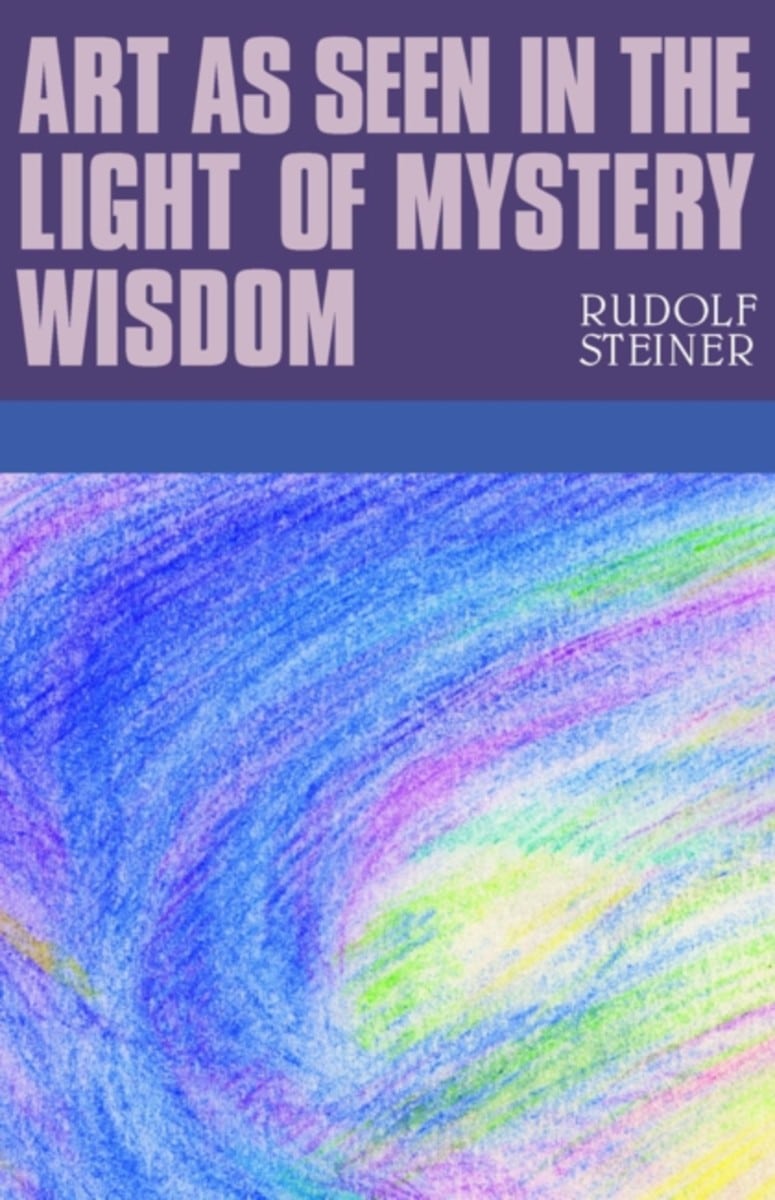
This lecture on Raphael points to an ever-greater inwardness or “internalizing” of the human soul in the future development of humanity. Steiner’s large-format watercolours can be said to be an unmistakable further expression of this. Though it might seem improbable at first to link Raphael’s works so directly with the painting impulse of Rudolf Steiner, separated as they are by four hundred years. An underlying relation becomes apparent, nonetheless, despite the manifest contrast. The Madonnas of Raphael will self-evidently never be surpassed. Yet, the future development of art, always “a daughter of the divine,” implies, in Rudolf Steiner’s sense, an ongoing spiritualization. We begin to recognize Raphael’s relevance for today and for the future.
This unique English translation is the first in a series of four lectures from GA 62, that are newly translated by Peter Stebbing. Edited by James Stewart and Urs Rüd.
About the Author
Rudolf Steiner (1861–1925) was born in the small village of Kraljevec, Austro-Hungarian Empire (now in Croatia), where he grew up. As a young man, he lived in Weimar and Berlin, where he became a well-published scientific, literary, and philosophical scholar, known especially for his work with Goethe’s scientific writings. At the beginning of the twentieth century, he began to develop his early philosophical principles into an approach to systematic research into psychological and spiritual phenomena. Formally beginning his spiritual teaching career under the auspices of the Theosophical Society, Steiner came to use the term Anthroposophy (and spiritual science) for his philosophy, spiritual research, and findings. The influence of Steiner’s multifaceted genius has led to innovative and holistic approaches in medicine, various therapies, philosophy, religious renewal, Waldorf education, education for special needs, threefold economics, biodynamic agriculture, Goethean science, architecture, and the arts of drama, speech, and eurythmy. In 1924, Rudolf Steiner founded the General Anthroposophical Society, which today has branches throughout the world. He died in Dornach, Switzerland.




Reviews
There are no reviews yet