
Georg Kühlewind
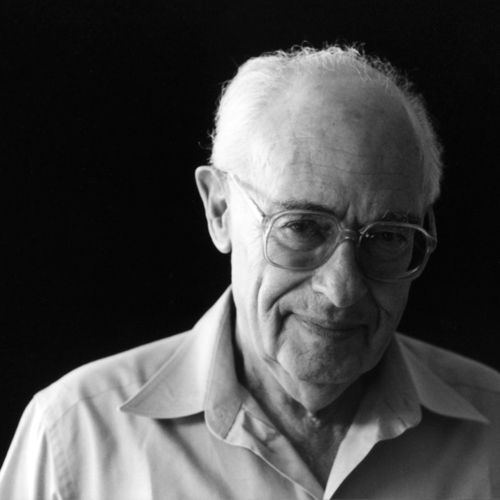 Georg Kühlewind (1924–2006) was a Hungarian physical chemist who became one of the most exacting teachers of meditative practice to come out of anthroposophy. Born György Székely in Budapest on 6 March 1924, he grew up in an assimilated Jewish family, lived through the Nazi occupation of Hungary, and spent a year imprisoned in Buchenwald alongside his father. He returned to a country under a second dictatorship and to a question that would occupy the rest of his life: what consciousness actually is, and what a person can do about their own.
At seventeen he studied under the classicist Karl Kerényi and expected to become a philologist. He turned instead to natural science, and spent thirty years teaching physical chemistry at a technical university in Budapest — colloid chemistry, adsorption, catalysis — holding several patents along the way. He always regarded that training as indispensable rather than incidental: the discipline of the laboratory is what kept his inner research honest. He met anthroposophy at eighteen and felt he already knew it; it was Rudolf Steiner’s epistemological work — above all The Philosophy of Freedom — that gave him the ground for the systematic practice he began around 1958.
He began leading study groups in 1965, and from 1966 lectured across Austria, Switzerland and Germany. For twenty years he returned again and again to a single passage — the Prologue to St John’s Gospel — and it is the text his central books circle and re-enter. Poetry mattered to him as much as philosophy: he read Hölderlin, Rilke and Celan, and learned Italian in order to read Dante in the original. Zen, which he met around 1967, left a lasting mark on his own practice. He wrote in Hungarian, German and English across some twenty-three books, and died in Budapest on 15 January 2006.
His subject, in the end, was attention: that thinking is an activity rather than a possession, that ordinary waking awareness is fed by a source it seldom notices, and that this source can be approached on purpose. He is not an easy writer, but he is an exact one — and the practice groups his students founded are still meeting in Europe, the United States and Southeast Asia, twenty years after his death.
Showing all 18 resultsSorted by latest


Showing all 18 resultsSorted by latest