

How Can Mankind Find the Christ Again? The Threefold Shadow-Existence of Our Time and the New Light of Christ
8 lectures, Basel and Dornach, December 22, 1918 – January 1, 1919 (CW 187)
Steiner examines the inner history of Christianity, explaining its relationship to ancient Judaism, Hellenism, Romanism, Gnosticism, and Egypto-Chaldean initiation. He describes the hidden spiritual battle raging today and the need for a renewal of the mysteries in a modern form.
Today’s road to Christ must involve a new, formative thinking whose Christian character is shown in the advent of selflessness, health, and a sense for truth. George O’Neil describes the nature of these lectures in his foreword: “As always, Rudolf Steiner spoke freely without using notes. Most of his audience had studied—or were at least familiar with—his written works and the published lecture cycles on the Gospels and related themes. A similar background will be needed for reading How Can Mankind Find the Christ Again? Such a background will prepare the reader for challenges and vistas not encountered elsewhere.”
How Can Mankind Find the Christ Again? is a translation of Wie kann die Menschheit den Christus wiederfinden? Das dreifache Schattendasein unserer Zeit und das neue Christus-Licht (GA 187).
About the Author
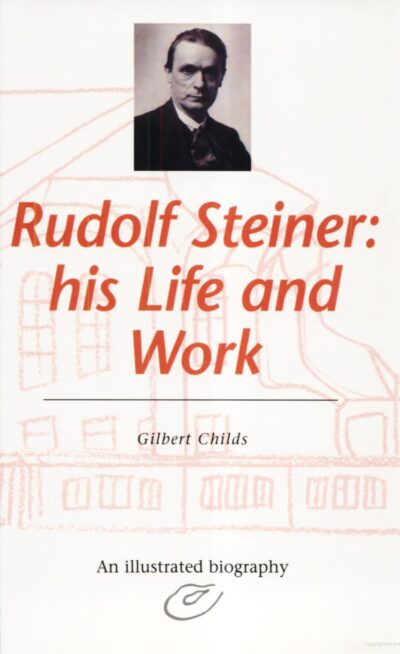
Rudolf Steiner (1861–1925) was born in the small village of Kraljevec, Austro-Hungarian Empire (now in Croatia), where he grew up. As a young man, he lived in Weimar and Berlin, where he became a well-published scientific, literary, and philosophical scholar, known especially for his work with Goethe’s scientific writings. At the beginning of the twentieth century, he began to develop his early philosophical principles into an approach to systematic research into psychological and spiritual phenomena. Formally beginning his spiritual teaching career under the auspices of the Theosophical Society, Steiner came to use the term Anthroposophy (and spiritual science) for his philosophy, spiritual research, and findings. The influence of Steiner’s multifaceted genius has led to innovative and holistic approaches in medicine, various therapies, philosophy, religious renewal, Waldorf education, education for special needs, threefold economics, biodynamic agriculture, Goethean science, architecture, and the arts of drama, speech, and eurythmy. In 1924, Rudolf Steiner founded the General Anthroposophical Society, which today has branches throughout the world. He died in Dornach, Switzerland.


Reviews
There are no reviews yet