
Eurythmy
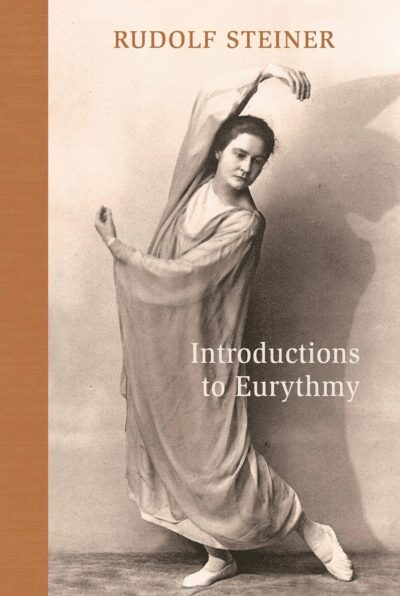
Eurythmy is an art of movement created by Rudolf Steiner in collaboration with Marie Steiner-von Sivers, first demonstrated publicly in 1912 and developed continuously through Steiner’s lectures and courses until 1925. Often described as “visible speech” and “visible music,” eurythmy transforms the sounds of language and the elements of music into expressive bodily movement, making audible realities visible through gesture, spatial form, and color.
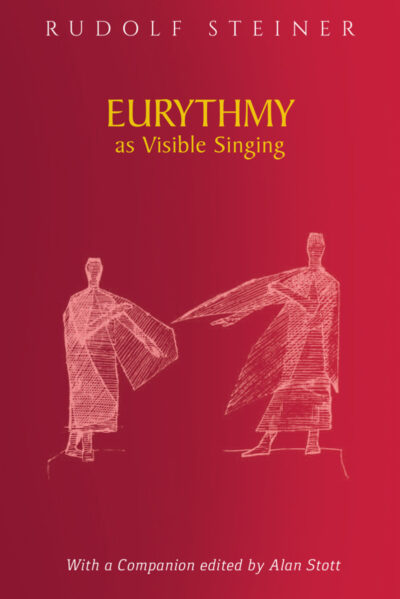
This collection of approximately 70 titles covers eurythmy as a performing art, a pedagogical discipline practiced in over 1,200 Waldorf schools globally, and a foundation for the therapeutic eurythmy practiced in clinics and medical settings. Key works include Steiner’s Eurythmy as Visible Speech (GA 279), Eurythmy as Visible Music (GA 278), and the foundational tone eurythmy lectures. Authors such as Lea van der Pals, Alan Stott, Dorothea Mier, and Elena Zuccoli provide practical manuals, philosophical context, and pedagogical guidance. The collection also addresses eurythmy figures — the pastel-on-black illustrations Steiner created to depict the color and movement qualities of each speech sound.
For eurythmy’s therapeutic applications, see Eurythmy & Movement Therapy under Health & Healing. The Music & Singing and Speech, Drama & Storytelling categories offer complementary perspectives on the sister arts eurythmy makes visible.
Showing 1–30 of 31 resultsSorted by latest
-

-

-
-

-
-

-

-

-

-

-

-
-

-

-
-

-

-
-

-

-

Anthroposophic Medicine, Anthroposophy, Arts & Society, Eurythmy, Eurythmy & Movement Therapy, Eurythmy in Education, Health & Biodynamics, Teacher Professional Development, Visual Arts, Waldorf & Family
Price range: $ 30.00 through $ 45.00Select options This product has multiple variants. The options may be chosen on the product page -
Anthroposophic Medicine, Anthroposophy, Arts & Society, Clinical Medicine & Therapies, Curative Education, Esoteric Studies, Eurythmy, Eurythmy & Movement Therapy, Eurythmy in Education, Health & Biodynamics, Spiritual Psychology, Teacher Professional Development, Visual Arts, Waldorf & Family
$ 26.00Get notified -

-




Showing 1–30 of 31 resultsSorted by latest